Monday, 29 June 2009

Specimens of Beautiful Colour


After selling out first time around we are happy to announce the return of the Bronze Hummingbird Skull necklaces by New York jeweller Erica Weiner. I thought this would be a good time to take a peek into the world of the Victorian fascination for the tiny hummingbird. 

The Victorians were quite an experimental lot when it came to jewellery, especially with their love of the exotic. Perhaps it was a combination of their tiny size (only 3 inches long including the beak), their exotic south American origins and the vibrancy of their plumage that made the hummingbird so popular for mounting onto earrings, necklaces, fans and brooches.
A visitor to Harry Emanuel's wonderful shop in 1865 described his stock as 'including hummingbird heads mounted in necklaces and earrings' and the international fashion for these birds endured until the 1870s. Leading jewellers such as Ward & Co and Boucard contributed bird and beetle jewellery to the International Exhibition of 1872 where the pieces were referred to as 'specimens of beautiful colour'.


Whilst, today, we would flinch at the thought of such jewellery it's fascinating all the same to see the extravagant and macabre display of how the Victorians showed their love for such creatures. 


I think this long heritage of 'hummingbird jewellery' is why I haven't taken my Erica Weiner necklace off since I first saw it. It is so tiny and so intricate, it just seems impossible that something so fragile as a hummingbird skull can be cast in solid bronze. A tiny sculpture that I wear everyday. 

Tuesday, 16 June 2009

A Charming Miniature Cup of Tea


What is it that thrills us so much about tiny versions of everyday things? A quick stroll through the Victoria & Albert Museum's online collection attests to this historical craze with hundreds of such objects from minuscule chairs to tiny portraits, with perhaps the most popular being the dolls house.


This morning we opened our very own little box of miniature tea cups and saucers by ceramicist Bethan Lloyd Worthington.  Many of you will recognise and perhaps be collecting her work and this new limited edition Dusky Pink version of her popular Tea Service jewellery has just been launched today.


Either as bracelet or pinned to your favourite blazer, these charming, tiny pieces of a tea service are objects on which to contemplate our obsession with miniature worlds.

£24 from the Jewellery Department
 

Thursday, 4 June 2009

Ceremonial Bowls by Samantha Allan


These bowls, which are part of the Contemporary Folk Ware Exhibition, are inspired by a combination of the romance of early Delft ware and maritime Scrimshaw, both of which commemorated special unions and historical events. 

(Delft Bowl circa. 1690 - Victoria and Albert Museum) 


Each bowl is hand made using a collage and lacquer technique which combines images of broken pieces of delft ware with words found engraved on pieces of 18th century scrimshaw such as ‘Homeward Bound’ and ‘I’ll sail the waves if you wait for thee’. Samantha personalises the bowls with a specific date and pair of initials that the customer gives her in order to celebrate a special day, such as a wedding or birthday.


Samantha has had a long standing interest in scrimshaw work and a love of the sea. She puts it down to the weekly trips she made as a child to the 19th Century Docks Museum in Hull where giant whale skeletons are suspended from the ceilings and a soundscape of whale calls is played throughout the vast rooms.


(18th century engraved whales tooth - known as Scrimshaw)


‘Scrimshaw, which is basically the tattooing of pieces of whale bone and teeth, is an uneasy thing for me to be inspired by. My fascination for both whales and the scrimshaw causes a tension as one has to be sacrificed to make the other. But at the time of the great whaling fleets, in the 18th and 19th century, when men had no choice but to be away for years at a time, I find it moving that the scenes on scrimshaw often depict the sailor’s longing for things such as houses, loved ones, dances. It is this sense of longing that I wanted to create in these bowls”. 


Samantha’s work which combines various historical events has led to commissions from museums and art galleries across the UK. 


Bowls £65 each form the Contemporary Folk Ware Exhibition 

Tuesday, 19 May 2009

Inspired by the Dutch Golden Age

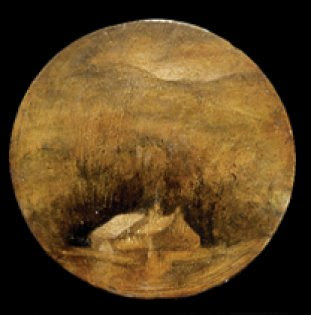
Circular Topography Boxes 


Inspired by the epic landscape painters of the Dutch Golden Age such as Jacob Van Rusiendeal and Jan Van Goyen, Denise Allan has created a series of painted boxes which depict the wild skies and vernacular architecture of Cumbria. 


For over twenty years Denise has looked at the Dutch Masters as a source of inspiration, in particular the use of light within painting and the use of alternative surfaces on which to paint such as boxes, cabinets and furniture. 


The lids of the Circular Topography Boxes are painted in oil and each one different.  The outside is painted and lacquered in old black and the inside is painted in a specific blue which is inspired by the blue that reveals itself behind the stormy grey clouds in the skies of the Dutch Masters.


£225 each


Available as part of the on-line exhibition Contemporary Folk Ware

Friday, 15 May 2009

Michelle Obama Supports Independent Designers

For the White House Correspondence Dinner last week, the first lady chose to wear a stunning piece from the new St Erasmus collection, Tribal Flower.


Looking radiant in a simple shocking pink dress she added a touch of glamour with this Flower Power necklace which is encrusted with tiny fresh water pearls, sequins, glass beads and metallic gold Zari crochet.


Flower Power Necklace £225

Tuesday, 5 May 2009

Contemporary Folk Ware Exhibition - Launches today


The ‘Contemporary Folk Ware’ exhibition, which launches today, celebrates a substantial body of work produced by contemporary artists and designer/makers that exemplifies the values of traditional folk ware. The term ‘folk’ conjures up images of simply decorated and honestly made objects created by rural communities that reflect everyday life.


Traditionally folk ware displayed elements of social history through the incorporation of re-used materials or designs and craft techniques transmitted from generation to generation.


This exhibition brings together objects created by a group of present day designer/makers linked by a deep-rooted allegiance to hand-made wares with a strong social and cultural heritage. Elements of personal history are intertwined with techniques and design motifs inspired by historical practices that produce objects with a sense of spontaneity and a comforting connection to long-held traditions.


Over the next few weeks a series of guest writers will explore the pieces within the exhibition which includes jewellery from Greece, small boxes depicting epic landscapes and animal masks which will turn any dinner party into a surreal evening. But for now why not explore the three rooms and tell us what you think.


Visit the exhibition here...